Why minutes matter more than they look
Minutes are your PTO’s official record of what was decided. Not what was discussed. What was decided.
When someone asks in March whether the board approved that field trip spending, the minutes are the answer. When a new treasurer needs to know who’s authorized to sign checks, the minutes are the answer. If they’re vague, missing, or never approved, nobody can say for sure what happened.
That’s a lot riding on one volunteer and a laptop. The good news is that strong minutes follow a pattern, and once you know it, the job gets much easier.
What belongs in PTO meeting minutes
Every set of minutes needs the same core pieces:
- The basics. Your organization’s name, the date, start time, location, and whether it’s a board meeting or a general meeting.
- Who was there. Attendance, and whether you had a quorum. Your bylaws set that number, so check them before your first meeting.
- Approval of last meeting’s minutes. Note whether they were approved as written or with corrections.
- Reports. Record that the treasurer’s report and any committee reports were given, and attach them. You don’t need to retype every number.
- Motions. The exact wording, who made it, who seconded it, and whether it passed or failed.
- Action items. Who’s doing what, and by when.
- Adjournment. The time the meeting ended.
- Your name. The secretary who recorded the minutes.
What to leave out
This is where most new secretaries overdo it. Minutes aren’t a transcript. Skip:
- Word-for-word debate, or who said what during discussion
- Side comments, opinions, and personal remarks
- Private details about individual students, families, or staff
A simple rule of thumb: record actions, not conversations.
Where new secretaries get stuck
Knowing what belongs is the easy part. The hard part happens in real time:
- Capturing a motion while people are still talking. The wording often shifts before the vote, and you need the version that actually passed.
- Tracking quorum as people come and go. If you lose quorum mid-meeting, votes after that point may not count.
- Turning rough notes into clean minutes before the details fade.
- Getting them approved and stored somewhere next year’s board can actually find them.
Each of these has a fix, and none of them require you to be a professional note-taker. They just require a system you set up before the meeting starts.
Why a generic template falls short
Most free minutes templates are built for corporate boards. They don’t have a spot for quorum, they don’t account for a treasurer’s report, and they don’t tie back to a sign-in sheet. You end up filling in blanks that don’t fit and inventing sections for the ones that do.
A PTO minutes template should match the way PTO meetings actually run, so all you have to do during the meeting is listen and fill in what happens.
Ready to take the guesswork out of your minutes?
If you’re the secretary
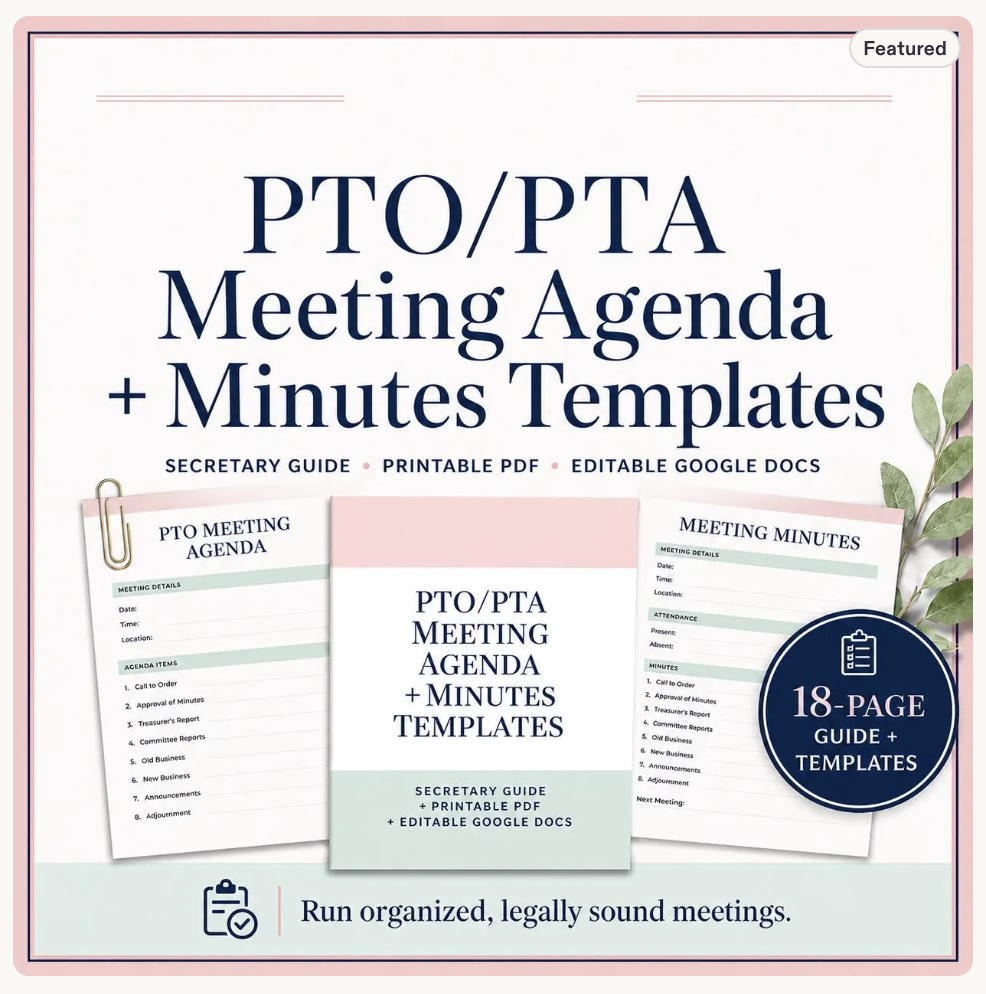
Meeting Agenda & Minutes Template for PTO/PTA
An 18-page secretary guide, printable and editable agenda and minutes templates, a sample filled-in meeting for reference, and a sign-in sheet with officer and member sections and quorum totals.
See the Minutes Template →If you’re the president running your first meeting
First Board Meeting Toolkit for PTO Presidents
Fully outlined agendas for your first board meeting and first general meeting, a first-meeting script, and a minutes template.
See the First Meeting Toolkit →